The laser sintering measure offers the key favorable position of making utilitarian parts in basically last materials. The parts are established in a precise controlled climate, and consequently the cycles give great part-security. Be that as it may, the framework is precisely more mind boggling than stereolithography and most different advancements. An assortment of thermoplastic materials, for example, nylon, glass filled nylon, and polystyrene are accessible. Surface completions and precision are not exactly tantamount to with stereolithography, however material properties can be very near those of the characteristic materials. Figure 6.86 shows a dashboard part produced using the Sinterstation Pro framework. A Sinterstation Pro 230 can deliver a section volume of 230 L (550 x 550 x 750 mm3).
No last relieving is needed as in stereolithography, yet since the articles are sintered, they are permeable. Contingent upon the application, it might be important to penetrate the article with another material to improve mechanical qualities. Much advancement has been made throughout the years in improving surface completion and porosity. The technique has additionally been reached out to give direct manufacture of metal and clay articles and devices.
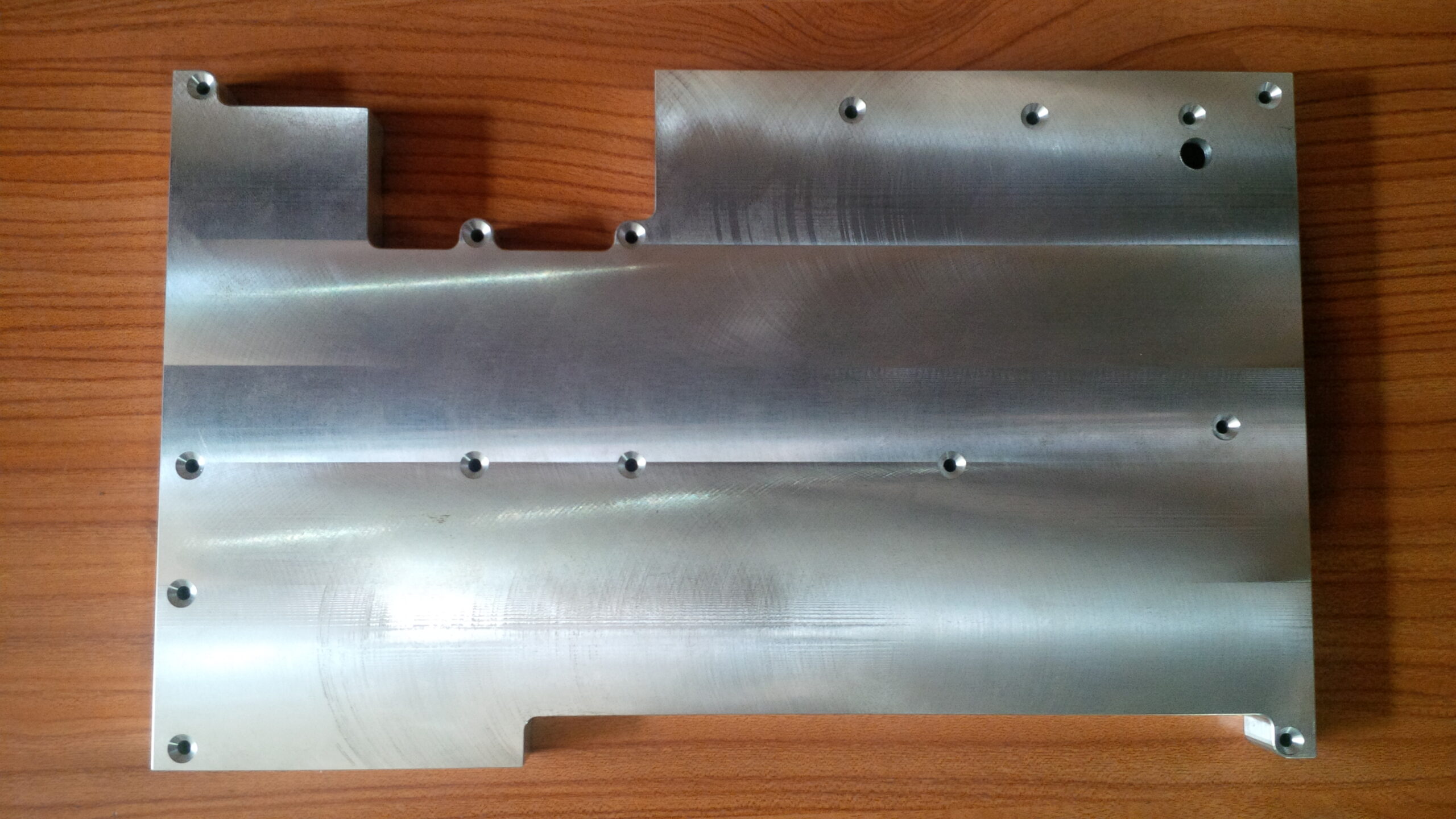
The outside of a section from the cycle is fine, similar to the base material whose particles are combined without complete dissolving. On the off chance that the temperature of uncured powder gets excessively high, abundance intertwined material can gather on the part surface. This can be hard to control since there are countless factors simultaneously. The temperature reliance of the cycle can here and there bring about abundance material intertwining to the outside of the model, and the thicker layers and variety of the cycle can bring about more Z-mistake. Different issues of the powder-bed measures incorporate conceivable porosity of parts, the main layers may require a base anchor to diminish warm impacts (e.g, twist), and part thickness may shift. Material changes require cleaning of the machine before making the cnc metal parts rapid prototypes products.
SLS prototyping procedures permit models from rapid prototyping service manufacturers china to be made with material properties closer to that of infusion formed pieces utilizing the DuraForm or DuraForm glass filled material. Furthermore, SLS has the capacity to make metal model parts / china precision machined components utilizing the LaserForm ST-200 material, where metallic powder is utilized in the laser sintering measure. For certain applications, there is one issue with the strategy: the finished result by and large has a thickness of 80%-99%, while a thickness of 100% is wanted, particularly with metal parts. Numerous endeavors are in progress for production of full thickness, nonpermeable, metal items.
In metal parts, the particular laser dissolving (SLM) is fundamentally the same as SLS as far as gear yet utilizes an a lot higher energy thickness to liquefy the powders by china rapid sheet metal suppliers. Hence, the manufactured parts show a thickness extremely near the hypothetical one. The cycle works with an assortment of materials, for example, zinc, bronze, tempered steel, device steel, and so on Notwithstanding, for certain metals, for example, Ti-6AI-4V and Ni-based super composites, it might be hard to deliver sound microstructure, and in this manner research is as yet under scrutiny.
This article is from https://www.rapidprototypechina.com.