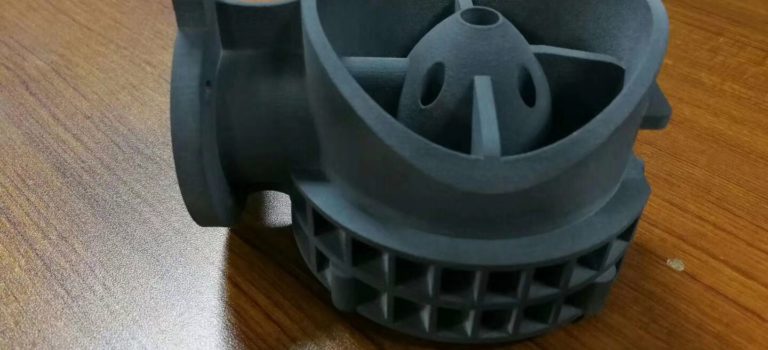
The technique employed in quickly fabricating a physical model of an assembly, taking help from a 3 dimensional CAD data is called rapid prototyping. Rapid prototyping becomes immensely necessary whenever a new product is to be introduced in the market. The functional parts of a prototype model of the products are made by rapid prototyping. The construction is mostly done using 3D printing technology. The first rapid prototyping methods were introduced back in the late 1980s and were widely used in model construction and making of prototype parts. Now there is really wide range of applications in various manufacturing processes.

ADVANTAGES OF RAPID PROTOTYPING
Rapid prototyping has been made possible by the advanced technology. Particularly engineers require to make quick models using advanced processes. Rapid prototyping helps companies in waste reduction, get their products tested in the real world and reach the market easily. Rapid prototyping eventually leads to the betterment of the product. Prototypes are mostly made with the same material as that of the final product.
CNC PROTOTYPING PROCESS
In CNC prototyping services, the first step in the process is the creation of geometrical data which could be either 3D solid or a 2D slice. The data should necessarily represent some valid 3D geometric model. The model is valid only if the computer is able to differentiate between points which are in the interior and which are in the exterior of the model. The CAD geometric forms are expressed in specified data formats, which is basic to additive manufacturing.
3D PRINTING
Some of the metal prototyping methods include- Sand casting, 3D printing, investment casting, Machining or fabrication of the part from the stock of the metal directly. All these prototyping methods come with some advantages and disadvantages. The article will put more light on 3D printing. 3D printing or additive manufacturing is the method of making one layer of the material in one time. All these layers are later joined to give the product a 3D-form. Each layer is extensively thin, which imparts it almost 2D form. The process is completely controlled by a computer which gives the output 3D product when design is provided as input to it. With advancement in technology, now there is a huge range of materials which can be used for printing like, plastic, steel, resin, wax, rubber, etc.
SAND CASTING
In order to check and make a prototype pattern for the testing of the product, most of the time sand mold is made by the pattern accounting to its cheapness and quick production process. A wooden pattern (loose) is obtained from wood with the help of pattern maker which employs various techniques. The manufactured pattern is according to the prototype design. The backdraft requiring parts of the prototype are made out as loose pattern pieces which are held with the help of pins. The molding sand should have such constitution, which is required for metal casting. It should give a smooth quality finish and should hold the shape well. This sand is used in making cast for metal prototypes.
RESOURCE BOX
Klarm is one of the leading rapid CNC prototyping company in China. The company is a prototype maker in China, which makes cheap and affordable prototypes. Contact us for getting cheap prototypes for your products.
The original source of this article is from https://www.rapidprototypechina.com.