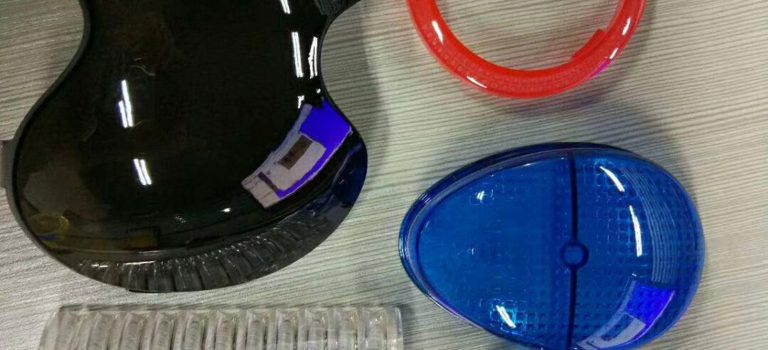
We are living in a modern world where every idea counts if one can prove its effectiveness in real life. But in order to that, one needs to show how it works or at least its prototype. In the case of services or software, it is possible to show the prototype easily as it doesn’t need to have any physical presence, but when it comes to equipment or any product that is being planned to be used in large numbers in the future, it is important to check its effectiveness by analyzing it first.

This can be done in two ways, first by actually manufacturing the whole equipment or product and then analyzing it. This will involve the setting up of the whole equipment and other facilities that will be required to make the product along with a skilled worker who will be able to carry out all the operations successfully. The other option is to have a small prototype of the same being produced which can be analyzed easily and is hassle free as well. The prototype is made in a matter of hours and doesn’t require any skilled Labors neither multiple machines. The second method is feasible because of two reasons. The first reason is that no one has the time in today’s world to wait for a whole model to be built and then test it. The working and the theory behind the working of the product is already known and verified, the main idea is to check the physicality of the product. The other reason is the cost effectiveness.
There are a lot of rapid tooling processes that can be used to make prototypes. Some of them are well known throughout the world while some are only being used in special labs because of their very specific nature. We will be discussing a few of them here: –
- 3D printing: – One of the most famous and well-known rapid tooling process is the 3D printing. This method aims at making the prototype of the required product at a lower size scale with the help of polymers heated so that they can be shaped. 3D printers are available now in the market and are very common in factories as well as in educational institutions as well. The CAD drawing of the product is used to make the prototype.
- Stereolithography: – in this process, the LASER is used to harden the liquid polymer which is then arranged layer by layer according to the design of the product and at the end, the whole prototype undergoes UV post-processing cure.
These are some of the methods that are used for rapid tooling prototype so that a prototype can be easily developed to analyze and study. There are many more methods which work around the same principle of either depositing a fused material or hardening the material with the help of the LASER.
China being the industrial hub has seen the rapid tooling China at close and have developed the method more and more to make it more effective, efficient and economical.
Resource Box: This article is originally from https://www.rapidprototypechina.com.